

Rockwood
Well-known member
- May 5, 2021
- 6,737
- 8,737
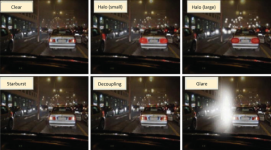
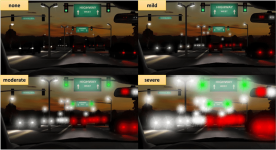
And visual side effect examples
The reason for all of this is because of how a multifocal IOL is made:
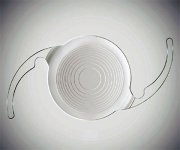
Since an implanted lens can’t bend like your natural one (we switch from near to far vision with muscles that bend your lens, which gets stiffer over the years and resists this), IOLs are made with multiple lens powers to allow the eye to focus on each distance. This means that instead of focusing on a set point, you’re focusing on ALL points simultaneously. Light that comes in is split between those spots and each focal point gets a fraction of the total light coming in.
At night, this becomes an issue because your pupil is dilated and the edges of each section are more exposed to light. For gramps that needed cataract surgery, this is less of a concern because you can’t dilate as well when you’re older, but for us young bucks, this means you end up with more light scatter. Also, since the light is split, you get less total light and contrast (think noon dune rides) suffers.
That glare example above is what I often see at night. When I watch TV at night, I have to move my head to block that light out or turn it off, otherwise I just can’t see out of the eye well because there’s a washout of light across my vision. Doc says it will reduce with time as my brain adapts, but it’s a definite problem, and it’s especially bad with multifocals.
The reason for all of this is because of how a multifocal IOL is made:
Since an implanted lens can’t bend like your natural one (we switch from near to far vision with muscles that bend your lens, which gets stiffer over the years and resists this), IOLs are made with multiple lens powers to allow the eye to focus on each distance. This means that instead of focusing on a set point, you’re focusing on ALL points simultaneously. Light that comes in is split between those spots and each focal point gets a fraction of the total light coming in.
At night, this becomes an issue because your pupil is dilated and the edges of each section are more exposed to light. For gramps that needed cataract surgery, this is less of a concern because you can’t dilate as well when you’re older, but for us young bucks, this means you end up with more light scatter. Also, since the light is split, you get less total light and contrast (think noon dune rides) suffers.
That glare example above is what I often see at night. When I watch TV at night, I have to move my head to block that light out or turn it off, otherwise I just can’t see out of the eye well because there’s a washout of light across my vision. Doc says it will reduce with time as my brain adapts, but it’s a definite problem, and it’s especially bad with multifocals.