Coilover spring rates

Joined
Dec 6, 2024
Messages
30
Reaction score
24
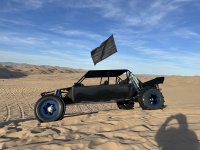
Took my car out for its second trip I’ve owned it and went through some pretty choppy stuff this weekend. I watched Doug’s x5 YouTube video on selecting the best springs for my car based on its setup. Was wondering if anyone had similar results that my car came up with. Currently on the car:
Rear is 500 over 600
Front is 250 over 300

After watching the YouTube video I came up with
Rear 300 over 500
Front 100 over 300

The car is a 2006 amplified performance
12 gallon tank 2D trans and LS1

Any information is appreciated
 

Attachments

  • IMG_3698.jpeg
    IMG_3698.jpeg
    2.5 MB · Views: 14
So how did the new rates work?
That is quite a drop in the rear.
General rule of thumb is to not have the top spring differ from the bottom spring by more than 100lbs.
 
So how did the new rates work?
That is quite a drop in the rear.
General rule of thumb is to not have the top spring differ from the bottom spring by more than 100lbs.
i was going to say the same that's too big of a split between the upper and lower.
grab this measurement for us.


this is a quick check and not exact but is a good starting point.
droop the rear suspension all the way out. without the limit strap.
loosen the preload collar all the way up to where the spring is just touching
take a measurement from a point on the top of the shock to the top of the collar that will be our starting point to figure out preload.
now run the preload collar down until you have the desired ride height (typically 66% of the shock shaft showing) if you have 10" of shaft showing at full droop on the limit strap you will have 6.6" showing at ride height.
now take that measurement from the top of the shock again to the top of the preload collar
If you have about 2-3" of preload the car is sprung decently and you will need to work on valving.

chop is hard to get out of the car you can loosen up the suspension so much that its tolerable but then you sacrifice a lot of your bottom out control.

question for you, what kind of duner are you? a fast beat the whoops rail the dunes driver? or a family cruiser that doesn't mind checking up in g outs and real bumpy stuff.


I have built a calculator to do these checks as well as a few good suspension write ups
 
Last edited:
So how did the new rates work?
That is quite a drop in the rear.
General rule of thumb is to not have the top spring differ from the bottom spring by more than 100lbs.
I haven’t bought the springs yet. Just based off the video and measurements I got that’s what I came up with. I thought the same thing for the rear of the car. The rear is bucking pretty hard through whoops so I’m more concerned about the rear. The front is stiff but it does okay.
 
i was going to say the same that's too big of a split between the upper and lower.
grab this measurement for us.


this is a quick check and not exact but is a good starting point.
droop the rear suspension all the way out. on the limit strap.
loosen the preload collar all the way up to where the spring is just touching
take a measurement from a point on the top of the shock to the top of the collar that will be our starting point to figure out preload.
now run the preload collar down until you have the desired ride height (typically 66% of the shock shaft showing) if you have 10" of shaft showing at full droop on the limit strap you will have 6.6" showing at ride height.
now take that measurement from the top of the shock again to the top of the preload collar
If you have about 2-3" of preload the car is sprung decently and you will need to work on valving.

chop is hard to get out of the car you can loosen up the suspension so much that its tolerable but then you sacrifice a lot of your bottom out control.

question for you, what kind of duner are you? a fast beat the whoops rail the dunes driver? or a family cruiser that doesn't mind checking up in g outs and real bumpy stuff.


I have built a calculator to do these checks as well as a few good suspension write ups
I can get you those measurements tonight. I wrote them down on a note pad. I’m a family duner with occasional get on the throttle to go through the whoops. Especially on olds. I can’t go through the whoops on olds my ass end of the car gets off the ground so I have to wait to get on it about halfway up the hill.
 
I can get you those measurements tonight. I wrote them down on a note pad. I’m a family duner with occasional get on the throttle to go through the whoops. Especially on olds. I can’t go through the whoops on olds my ass end of the car gets off the ground so I have to wait to get on it about halfway up the hill.
Bucking is typically a valving issue or bypass adjustment issue unless the car is so over sprung the bypasses cant control it. 500-600 may be too high.
300-500 gives us a 188 spring rate this seems low for a ls car, that would make the corner weight 750lbs but motion ratio comes into account as well.
 
Last edited:
My car is a heavy dual sport. It has a 415 LS3 and S4. Weigh 3,200lbs with 38gal of fuel. I used Doug’s video to help me out with spring rates. I ended up with 200/300 in the front & 450/500 in the rear. Car is good over the chop and has good bottoming resistance too. We run a good pace and I have no complaints about the car over big or small stuff.

Based on the numbers you put out - 100/300. You could get the same rate with a 125/200.

Rear 300/500 you could go to 350/400 for same combined rate.
 
I can get you those measurements tonight. I wrote them down on a note pad. I’m a family duner with occasional get on the throttle to go through the whoops. Especially on olds. I can’t go through the whoops on olds my ass end of the car gets off the ground so I have to wait to get on it about halfway up the hill.
Based on the picture of your car, you are not using your rear crossover rings. If you have a bucking problem with the 500/600 springs that equal a 273 combined rate, going to a 188 combined rate will definitely help with bucking. You can use the crossover rings too to help out with bottoming on the bigger g-outs
 
Based on the picture of your car, you are not using your rear crossover rings. If you have a bucking problem with the 500/600 springs that equal a 273 combined rate, going to a 188 combined rate will definitely help with bucking. You can use the crossover rings too to help out with bottoming on the bigger g-outs
Yeah I did the math and rear came out to be 188 and front 70.5
 
My car is a heavy dual sport. It has a 415 LS3 and S4. Weigh 3,200lbs with 38gal of fuel. I used Doug’s video to help me out with spring rates. I ended up with 200/300 in the front & 450/500 in the rear. Car is good over the chop and has good bottoming resistance too. We run a good pace and I have no complaints about the car over big or small stuff.

Based on the numbers you put out - 100/300. You could get the same rate with a 125/200.

Rear 300/500 you could go to 350/400 for same combined rate.
this is a good example of wheel rate. I ran a 450-500 in the rear of my ls s4 car that weighs approximately 2800 lbs. and it was too light with very little bottom out control. The best way we can help is to grab some measurements and we can get you dialed in.
 
Bucking is typically a valving issue or bypass adjustment issue unless the car is so over sprung the bypasses cant control it. 500-600 may be too high.
300-500 gives us a 188 spring rate this seems low for a ls car, that would make the corner weight 750lbs but motion ratio comes into account as well.
i was going to say the same that's too big of a split between the upper and lower.
grab this measurement for us.


this is a quick check and not exact but is a good starting point.
droop the rear suspension all the way out. without the limit strap.
loosen the preload collar all the way up to where the spring is just touching
take a measurement from a point on the top of the shock to the top of the collar that will be our starting point to figure out preload.
now run the preload collar down until you have the desired ride height (typically 66% of the shock shaft showing) if you have 10" of shaft showing at full droop on the limit strap you will have 6.6" showing at ride height.
now take that measurement from the top of the shock again to the top of the preload collar
If you have about 2-3" of preload the car is sprung decently and you will need to work on valving.

chop is hard to get out of the car you can loosen up the suspension so much that its tolerable but then you sacrifice a lot of your bottom out control.

question for you, what kind of duner are you? a fast beat the whoops rail the dunes driver? or a family cruiser that doesn't mind checking up in g outs and real bumpy stuff.


I have built a calculator to do these checks as well as a few good suspension write ups
The rear of my car top spring to bottom spring is 30.5”
Car sitting with top nut just touching top spring my compressed spring is 27.5”
With the car sitting the way it was untouched I have 10.75” of shaft showing.

The front I have 10” coilover top of spring to bottom of spring I have 22.75”
Car sitting with top nut just touching top spring my compressed spring is 21”
With the car sitting the way it was untouched I have 8.25” of shaft showing.
 
The rear of my car top spring to bottom spring is 30.5”
Car sitting with top nut just touching top spring my compressed spring is 27.5”
With the car sitting the way it was untouched I have 10.75” of shaft showing.

The front I have 10” coil over top of spring to bottom of spring I have 22.75”
Car sitting with top nut just touching top spring my compressed spring is 21”
With the car sitting the way it was untouched I have 8.25” of shaft showing.
with this information without knowing the wheel rate. your spring rate should be around 212 that would be a 400-450 you can split this a little and go with a 375-500 its a little bigger split than we would like to see but it will help with bottom out control if the cross over collars are adjusted properly.

the front is closer maybe a 100-250 will work but well need the rest of the measurements for that one as well.
 
Could you explain how or why this is for the spring inexperienced readers?

With dual-rate springs at ride height both springs are active (combined rate = softer).
At crossover the upper spring collapses (coil binds or is blocked), and only the lower spring works.
After crossover you’re on the stiffer main spring.
If the rates are very far apart for example lets say 200 upper and 500 lower
The effective dual rate might be 143 lbs per inch
Then suddenly you jump to 500 lbs per inch
That’s a huge rate jump, which causes a noticeable “step” in stiffness harsh feel in mid travel, and upsets the car in whoops and big bumps
 
with this information without knowing the wheel rate. your spring rate should be around 212 that would be a 400-450 you can split this a little and go with a 375-500 its a little bigger split than we would like to see but it will help with bottom out control if the cross over collars are adjusted properly.

the front is closer maybe a 100-250 will work but well need the rest of the measurements for that one as well.
Gotcha yeah I went through your file and I’ll get those measurements to you. Thanks for the help. I kinda figured with what I got based on that video it seemed a little light and a pretty big split between the 2 springs. But when I bought the car I knew it was over springed I just took it out to see how it handled and it does great through G-outs but when it comes to the small choppy stuff I get bounced around like a rag doll lol
 
i went through the exact same issues my main problem wound up being the coil overs had a ton of valving in them so after eliminating the valving in the coil overs, taking a tiny bit out of the bypasses and springing the car correctly its night and day difference.
 
I haven’t bought the springs yet. Just based off the video and measurements I got that’s what I came up with. I thought the same thing for the rear of the car. The rear is bucking pretty hard through whoops so I’m more concerned about the rear. The front is stiff but it does okay.
Bucking can be a lot of things:

1. Not enough valving for the primary rate
2. Too much rebound stiffness causing packing, then causing it to bottom hard and bounce
3. Too soft on compression causing it to slam into the stop (especially if not a foam or hydraulic stop)
4. Not enough throttle (or worse: brakes) to keep the rear planted/controlled

Since your primary rate is super high compared to your overall rate, that's probably the culprit as @ranman5608 says. If it continues, high speed video helps a ton to see what needs to be adjusted.
 
With dual-rate springs at ride height both springs are active (combined rate = softer).
At crossover the upper spring collapses (coil binds or is blocked), and only the lower spring works.
After crossover you’re on the stiffer main spring.
If the rates are very far apart for example lets say 200 upper and 500 lower
The effective dual rate might be 143 lbs per inch
Then suddenly you jump to 500 lbs per inch
That’s a huge rate jump, which causes a noticeable “step” in stiffness harsh feel in mid travel, and upsets the car in whoops and big bumps
Thank you for the detailed explaination!
 
Back
Top