Comp Hill

GLAMIS WEATHER

ESCO

Well-known member
Joined
May 4, 2021
Messages
25,576
Reaction score
11,357

How Competition Hill Got Its Name

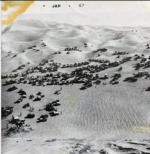
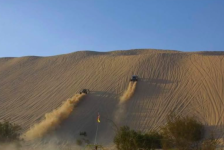
In the 1970s and 1980s, as high-horsepower sand rails, dune buggies, ATVs, and later sport UTVs became more popular, riders naturally began challenging each other to climb one of the steepest and most visible dunes in the Glamis area. The hill became a gathering place where people would line the sides and watch drivers attempt the climb. The informal “competition” to reach the top is what gave the dune its name. Over time, Competition Hill became a proving ground for both driver skill and vehicle performance.

The Glory Years

During major weekends such as Thanksgiving, New Year’s, Presidents’ Day, and Halloween, thousands of spectators would gather at the base and along the sides of the hill. Climbing Competition Hill became a badge of honor. A successful run meant your setup, horsepower, paddle tires, and driving ability were dialed in. Rollovers and spectacular saves often drew huge crowds.

Why It Changed

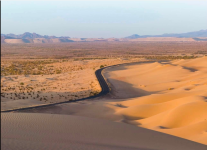
Unlike a mountain, a sand dune is constantly moving. Wind reshapes the Algodones Dunes every year. Many longtime Glamis riders remember that the original Competition Hill gradually changed shape and, according to some local accounts, was largely blown away and became less distinct over time. The “Competition Hill” people refer to today is not necessarily identical to the hill from the 1980s and 1990s.

Competition Hill vs. Oldsmobile Hill

Many visitors confuse Competition Hill with Oldsmobile Hill. Competition Hill is closer to Highway 78 and has historically been the most famous spectator hill in Glamis. Oldsmobile Hill became known as a more serious challenge deeper in the dunes where riders tested powerful machines against a steeper climb.

A Piece of Glamis Culture

Today, Competition Hill remains part of Glamis folklore. Stories of “making the hill,” blowing paddles off a rail, or getting stuck halfway up are passed down through generations of dune riders. Even though the shape of the dune changes with the wind, the name still represents the competitive spirit that helped make the Glamis dunes legendary among off-road enthusiasts.
1781799539317.png
 

How many have been to bombing targets before ?

1. Imperial Sand Dunes Recreation Area
The most famous landmark in Glamis. These dunes were formed from sands left behind by ancient Lake Cahuilla and stretch more than 40 miles across Imperial County. The area is also known as the Algodones Dunes and was designated a National Natural Landmark in 1966.

2. Oldsmobile Hill

Probably the most iconic off-road destination in Glamis. Since the early days of dune buggies and sand rails, enthusiasts have gathered here to watch hill climbs, races, and holiday events. It’s considered the social center of Glamis culture.

3. Old Plank Road

One of the most significant historical sites near Glamis. Built in 1915, this wooden road crossed the shifting sand dunes and became the first practical automobile route connecting Southern California with Arizona. Remnants still exist today and are protected as a California Historical Landmark.

4. Glamis Flagpole

A modern landmark and gathering place for off-roaders. The flagpole originated as a memorial and has become the centerpiece of annual Veterans Day celebrations in the dunes, honoring military service members and Glamis community members.

5. World War II Training Areas & Bombing Targets

During WWII, the Glamis dunes were part of General Patton’s vast Desert Training Center. Remnants of practice bombing targets—known locally as the “Xylophones”—can still be found buried among the dunes. Numerous stories also persist about military vehicles and aircraft lost beneath the shifting sand.

6. The Historic Glamis Railroad Stop

The community of Glamis itself began as a Southern Pacific Railroad stop in the late 1800s. While little remains of the original station era, the town’s existence is directly tied to the railroad crossing the desert.
 

History of Osborne Overlook as we know it!

Osborne Overlook is one of the most iconic viewpoints in the Glamis dune system, but many people don’t realize it’s named after Hugh T. Osborne, a longtime advocate for recreation and public access in the Imperial Sand Dunes area. The overlook sits along Highway 78 roughly halfway between the Glamis Store and the Cahuilla Ranger Station, offering one of the best panoramic views of the entire dune field.

The overlook itself wasn’t created because of mining, railroads, or a historic settlement. Instead, it developed as a scenic pullout and observation point as recreation in the dunes exploded after World War II. As dune buggies, Jeeps, ATVs, and later UTVs became popular, the location became a natural gathering spot because it sits on elevated ground overlooking the massive dune system.

The overlook has been officially named Hugh T. Osborne Lookout Park for decades and serves as the primary scenic viewpoint over the Imperial Sand Dunes Recreation Area.

Here’s the deeper story: Hugh T. Osborne was not just “some guy the overlook was named after.” He appears to have been a major Imperial Valley civic/political figure tied to farming interests, veterans groups, and county government.

Public records connect Hugh Osborne to Imperial County’s Board of Supervisors and identify him as secretary-manager of the Associated Farmers in the late 1930s/early 1940s. One academic source says he was interviewed during an INS investigation because of possible ties between the Border Patrol and the Associated Farmers.

That part of the story gets darker: during the 1930s, Imperial Valley had major farm-labor unrest. Some historical research describes Osborne as involved with anti-labor/anti-communist organizing, including the American Legion’s “Subversive Activities Committee.” One account says attorney Grover Johnson claimed Hugh Osborne helped start an assault during labor-conflict violence in 1934.

So the overlook likely honors him because he was an influential local Imperial County figure, not necessarily because he discovered the dunes or built Glamis. The exact dedication record for the lookout is hard to find online, but the name Hugh T. Osborne Lookout Park is clearly attached to the BLM-managed Imperial Sand Dunes area today.

1781881000319.png
 
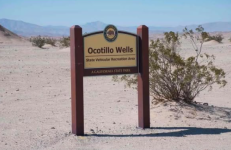
Ocotillo Wells has one of the most interesting histories in California off-roading because the area’s story stretches from ancient oceans and Native trade routes to becoming one of the largest off-road parks in the United States.
Before the off-roaders arrived
Millions of years ago, the area that is now Ocotillo Wells was covered by an inland sea. That’s why places like Shell Reef contain visible marine fossils today. Later, the region became part of ancient Lake Cahuilla, a massive lake that periodically filled the Imperial and Coachella Valleys.
Long before motorcycles and UTVs, the area was used by the Kumeyaay, Cahuilla, and other Native peoples as a crossroads for trade routes moving between the desert, mountains, and Colorado River regions. Archaeological sites throughout the park document thousands of years of human activity.
Where the name “Ocotillo Wells” came from
In the late 1800s and early 1900s, prospectors drilled exploratory wells in the area looking for oil. Most were unsuccessful, but the wells and the abundant ocotillo plants gave the area its name: “Ocotillo Wells.”
The birth of off-roading
The desert’s wide-open terrain attracted motorcycle riders, four-wheel-drive enthusiasts, and dune buggy owners beginning in the 1940s and 1950s. By the 1960s and 1970s, Southern California’s growing off-road culture was making regular pilgrimages to Ocotillo Wells. Riders were drawn to the area’s unique combination of washes, badlands, sand hills, mud hills, and open desert.
Unlike Glamis, which is primarily a dune environment, Ocotillo Wells offered virtually every type of desert terrain in one location.
Becoming a State Vehicular Recreation Area
Recognizing the area’s popularity, California established the Ocotillo Wells State Vehicular Recreation Area (SVRA) under the Off-Highway Motor Vehicle Recreation program. Today the park encompasses more than 85,000 acres and is managed by California State Parks specifically for OHV recreation.
One of the things that made Ocotillo Wells unique was that it remained largely open-riding terrain. Unlike many OHV parks that restrict riders to marked trails, much of Ocotillo Wells allows open travel, giving it a “freedom” feel that helped build its cult following.
Famous landmarks and legends
Several iconic riding destinations became synonymous with Ocotillo Wells:
* Devil’s Slide – a steep hill climb that has humbled riders for decades.
* Blowsand Hill – one of the most popular gathering spots.
* Pumpkin Patch – strange sandstone formations resembling giant pumpkins.
* Shell Reef – fossilized ancient seabed.
* Gas Domes – bubbling methane vents in the desert floor.
Ocotillo Wells today
Today Ocotillo Wells remains one of California’s premier off-road destinations. It’s open year-round, free to enter and camp in most areas, and serves everyone from first-time dirt bike riders to hardcore rock crawlers and UTV enthusiasts. The park also balances recreation with protection of archaeological sites, wildlife habitat, and geological features.
A lesser-known fact: many early Glamis riders also spent time in Ocotillo Wells, and the two locations helped shape Southern California’s modern off-road culture. Before long-travel UTVs became common, weekend riders often split their trips between the dunes of Glamis and the washes and hill climbs of Ocotillo Wells.
1781962042612.png
 

The history of Buttercup OHV!

Buttercup is the southernmost riding area within the larger Imperial Sand Dunes Recreation Area, which is part of the massive Algodones Dunes dune system stretching roughly 40–45 miles along the California-Arizona border. The dunes were formed from windblown sands left behind by ancient Lake Cahuilla thousands of years ago. Prevailing winds pushed those sands eastward into the dune field we know today.

Long before recreation vehicles arrived, the dunes were a major natural barrier to travel. During the early 1900s, routes crossing the dunes connected Southern California with Arizona, and during World War II portions of the dune system were used for desert warfare training by U.S. military forces. After the war, surplus Jeeps and four-wheel-drive vehicles helped create the modern off-road culture that eventually made areas like Buttercup famous.

Today, Buttercup Valley is one of the most accessible dune riding areas because it sits immediately west of Yuma and just south of Interstate 8. Its easier access and smaller dune layout made it a favorite destination for families, beginner riders, and Arizona-based dune enthusiasts. During major holiday weekends, the area effectively becomes a temporary city of campers, toy haulers, vendors, and off-roaders.

How Did Buttercup Get Its Name?

The exact origin of the name “Buttercup” is surprisingly difficult to pin down. Unlike names such as Glamis or Osborne Overlook, there is no widely documented official naming record from the Bureau of Land Management.

The most commonly accepted explanation among local historians and longtime desert users is that the valley was named after the yellow desert wildflowers—often referred to as buttercups—that occasionally bloom in the sandy flats during favorable rainfall years. The broad sandy valley south of Interstate 8 was known as Buttercup Valley before the OHV area became famous, and the riding area inherited the geographic name. While this explanation is widely repeated, there is no known official government document that definitively states the naming origin. Historical records generally reference “Buttercup Valley” rather than explaining why it was named.

Buttercup’s Place in Off-Road Culture

While Glamis gets most of the attention, Buttercup has played a major role in Southwestern off-roading:

* It became the primary dune destination for many Arizona riders.
* It served as a training ground for new riders because of its smaller, less intimidating dunes.
* It helped expand the popularity of dune riding beyond Southern California.
* It became a major winter destination for snowbirds and RV travelers from across the western United States.

Many longtime dune riders consider Buttercup the “gateway dunes”—the place where countless families first learned to ride before eventually exploring larger areas such as Glamis, Gordon’s Well, and the larger dune complexes farther north.

One interesting piece of trivia: Buttercup is actually older than many people realize. The area was being used by off-road enthusiasts well before modern UTVs existed, when dune buggies, motorcycles, Jeeps, and Corvairs dominated the sand scene. In many ways, Buttercup helped build the culture that later exploded across the entire Imperial Sand Dunes system.
1782139277684.png
 
The U.S. military has had a major influence on the Glamis area and the surrounding Imperial Sand Dunes, both historically and culturally.
World War II: Training for Desert Warfare
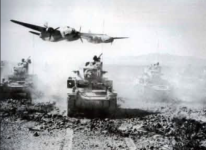
The biggest military impact came during World War II when General George S. Patton Jr. established the vast Desert Training Center (later known as the California-Arizona Maneuver Area) in 1942. The training area covered approximately 18,000 square miles across Southern California, Arizona, and Nevada, making it the largest military training ground in U.S. history. More than one million soldiers trained there before deploying overseas.
While the major camps were located around places like Chiriaco Summit, Desert Center, Pilot Knob, Iron Mountain, and the Colorado Desert, the Imperial Sand Dunes region near Glamis was frequently used for:
* Tank and armored vehicle maneuver exercises
* Desert survival training
* Navigation and reconnaissance practice
* Aircraft coordination and observation missions
* Live-fire and combat simulations in desert terrain similar to North Africa
The military chose the area because the dunes and surrounding desert closely resembled conditions soldiers would encounter fighting the German Afrika Korps in North Africa.
Physical Remnants Still Found Today
Military training left lasting traces throughout the desert:
* Old tank tracks and maneuver routes
* Camp foundations and training sites
* Observation points
* Airstrip remnants
* Unexploded ordnance in some remote areas
The Bureau of Land Management still warns visitors that unexploded military munitions can occasionally be found in portions of the historic training area.
Influence on Modern Recreation
Ironically, many of the routes first crossed by military vehicles later became access routes used by prospectors, explorers, and eventually off-road enthusiasts.
The military demonstrated that tracked and wheeled vehicles could successfully operate in deep sand, helping establish the desert as a place where vehicle recreation was possible. Decades later, Glamis evolved into one of the world’s premier off-road recreation destinations.
Modern Military Activity
The military continues to have a presence near the Imperial Sand Dunes:
* The nearby Naval Air Facility El Centro conducts aviation training.
* Military aircraft frequently transit the region.
* Portions of the surrounding desert are still used for training exercises by the U.S. military.
A Little-Known Glamis Connection
Many historians consider the dunes around Glamis to have contributed indirectly to Allied victories in North Africa. Soldiers learned how to operate tanks, trucks, and supply systems in harsh desert conditions before facing combat overseas. As one historical account noted, many of the battles of World War II were effectively “won” during the intense training conducted on these California desert lands
1782314028246.png
 

What really happened to Competition hill night life? Does history repeat itself?

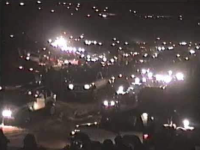
Competition Hill wasn’t closed at night because of the hill-climb activity itself. It was primarily a response to the massive nighttime party scene that had developed there by the late 1990s and early 2000s.

By 2001–2002, Thanksgiving and New Year’s weekends at Glamis were drawing well over 100,000 visitors. Competition Hill had become the focal point for huge after-dark gatherings, with thousands of people packed into the bowl below the hill. Law enforcement reported problems including:

* Large unauthorized rave-style parties

* Heavy alcohol and drug use

* Assaults and fights

* Shootings and stabbings

* Reckless vehicle operation in crowded areas

* Difficulty for EMS and law enforcement to access emergencies

* Fatal crashes and other serious injuries

The tipping point was the Thanksgiving 2001 season. Officials described it as one of the most violent weekends Glamis had ever experienced. A shooting death occurred, a ranger was run over by a vehicle, numerous violent incidents including stabbings and sexual assaults were reported and emergency services were overwhelmed. Vehicles were being lit on fire, huge holes dug around them leaving no exit and many being stolen.

As a result, in November 2002 Imperial County and the BLM implemented nighttime closures at Competition Hill. The closure generally ran from roughly 30 minutes before sunset until 30 minutes after sunrise. Officials specifically stated the goal was to clear out the bowl area where the parties were occurring and restore safety for riders, emergency personnel, and families visiting the dunes.

One quote from the time described the problem bluntly: when the lights, generators, and alcohol came out after dark, Competition Hill attracted a “riot element.” Law enforcement agencies responded with large-scale operations, barricades, helicopters, and officers from multiple agencies.

An interesting side note: many longtime Glamis regulars actually supported the closure. They felt the problem wasn’t off-roaders competing on the hill—it was people who came to party and had little interest in riding. Several off-road advocacy groups initially opposed any closure but acknowledged that the lawlessness had become a serious issue.

The closure was really the beginning of a larger shift in Glamis management. The early 2000s saw increased enforcement, more safety regulations, larger law-enforcement deployments during holiday weekends, and a push to move Glamis away from the “anything goes” atmosphere that had developed during the late 1990s.
1782484543457.png
 

The wildlife of Glamis!!

With the exception of Sand bunny we occasionally see..

The Algodones Dunes (also known as the Imperial Sand Dunes or Glamis Dunes) may look like a sea of sand, but they support a surprisingly diverse ecosystem. In fact, the dune system is one of the most biologically unique desert habitats in North America, with several species found nowhere else on Earth.

Reptiles – The Kings of the Dunes

Colorado Desert Fringe-Toed Lizard

* The most famous resident of the dunes.
* Special fringes on its toes act like built-in sand paddles, allowing it to run across soft sand and even “swim” beneath the surface.
* It can close its nostrils and protect its eyes from blowing sand.

Flat-Tailed Horned Lizard

* A master of camouflage that blends perfectly with the desert floor.
* Often found around the edges of dune habitats where vegetation is present.

Desert Tortoise

* More common in the harder desert areas surrounding the dunes than on the open sand itself.
* Can spend much of its life underground to avoid extreme temperatures.

Sidewinder Rattlesnake

* Famous for its unique sideways movement across loose sand.
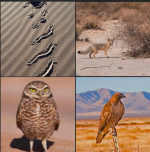
* Leaves the distinctive J-shaped tracks often seen in untouched dune areas.

Mammals – Mostly Seen at Dawn and Dusk

Kit Fox

* One of the most elusive predators in the dunes.
* Large ears help dissipate heat and locate prey underground.
* Primarily hunts rodents, insects, and reptiles at night.

Coyotes

* Common throughout the Imperial Valley and dune system.
* Highly adaptable and will travel long distances through the dunes searching for food.

Black-Tailed Jackrabbit

* Frequently spotted at sunrise and sunset.
* Can reach speeds approaching 40 mph to escape predators.

Desert Kangaroo Rats

* Rarely seen because they are nocturnal.
* Obtain most of their water from seeds rather than drinking.


Birds

The dunes attract many birds, especially after winter rains.

* Mourning doves
* Burrowing owls
* LeConte’s thrashers
* Gnatcatchers
* Cliff swallows
* Various hawks and raptors that hunt rodents and lizards in the dune fields.
1782576565604.png
 

The introduction of the SXS! Are you team old school or new school?

The introduction of the UTV (Utility Task Vehicle), often called a side-by-side (SXS), arguably changed the off-road industry more than any vehicle since the rise of the ATV in the 1980s.

Before UTVs

In the 1970s–1990s, the off-road scene was dominated by:

* Dirt bikes
* ATVs (quads)
* Sand rails
* Jeeps and 4x4 trucks
* Baja-style race vehicles

Many of these vehicles required significant skill, fabrication knowledge, or physical ability to operate. Families often needed multiple machines to ride together.


The UTV Revolution (2000s–Present)

The first modern UTVs, such as the Polaris Ranger and later the sport-focused Polaris RZR introduced in 2007, changed everything.

1. Made Off-Roading More Accessible

UTVs allowed:

* Husbands and wives to ride together
* Parents to bring kids
* Older enthusiasts to continue riding
* Newcomers to enjoy off-roading without motorcycle or ATV experience

Someone could buy a machine on Friday and “confidently” drive dunes, trails, or desert terrain on Saturday.


2. Created an Entire New Industry

Before UTVs:

* Few companies specialized in aftermarket parts.

Today:

* Suspension companies
* Cage builders
* Wheel manufacturers
* Lighting companies
* Audio companies
* Tire manufacturers
* repair and maintenance facilities
* part Accessories

Entire businesses exist solely because of UTVs.

For example, companies like Desert Whips UTV Center , Price Design Wheels, DRT Motorsports saw major growth from the UTV boom.
———
3. Changed the Culture of Places Like Glamis

Before the UTV era:

* Three-wheelers and quads dominated.
* Sand rails were common.
* Competition Hill and Oldsmobile Hill were filled with motorcycles and ATVs.

Today:

* UTVs are the dominant vehicle.
* Large camps revolve around side-by-sides.
* Night rides have become a major activity.
* LED whips, rock lights, stereos, and custom builds became cultural icons.

The look of Glamis in 2026 is dramatically different than it was in 1996.


4. Changed Racing

UTVs created entirely new racing classes:

* Desert racing
* Short-course racing
* Hill climbs
* Sand drags
* Ultra4 competition

Organizations like SCORE International, Best In The Desert, and Championship Off-Road now feature highly competitive UTV classes.

Modern race UTVs can exceed 100 mph and rival purpose-built race vehicles from previous decades.


5. Brought More Money Into Off-Roading

A typical enthusiast in the 1990s might have:

* A quad
* A pickup truck
* Basic riding gear

A modern UTV enthusiast may own:

* $30,000–$60,000 machine
* Trailer
* Toy hauler
* Suspension upgrades
* Wheels and tires
* Lighting packages
* GPS systems
* Communications equipment
 

Love em or hate em.. BLM is here to stay and we should co exist!

The history of the Bureau of Land Management (BLM) and the Imperial Sand Dunes (better known by most enthusiasts as Glamis) is a story of balancing two competing missions: protecting public land while keeping it open for recreation. Depending on who you ask, the BLM has either preserved Glamis for future generations—or made access increasingly difficult.

Here’s the full picture.

How the BLM became involved

The dunes are federally owned public land managed by the Bureau of Land Management.

The BLM itself was created in 1946 when two federal agencies—the General Land Office and the Grazing Service—merged. Its job became managing millions of acres of public land across the western United States for multiple uses, including recreation, grazing, mining, wildlife conservation, and energy development.

The Algodones Dunes had already been used for decades by:

* Native peoples
* Railroad construction crews
* Military training during World War II
* Early off-road enthusiasts beginning in the 1930s and exploding after WWII as surplus Jeeps became available.


The birth of the recreation area

As off-roading became more popular during the 1960s and 1970s, the federal government recognized the dunes as one of America’s premier OHV destinations.

The BLM officially established and began managing what is now known as the Imperial Sand Dunes Recreation Area.

Today it includes:

* roughly 118,000 acres
* over 40 miles of dunes
* the largest open OHV dune system in the United States.


Ways the BLM has helped the dunes

Many people focus on restrictions, but the BLM has also invested heavily in making Glamis what it is today.

1. Kept it public

Without federal ownership, much of the dunes could have eventually become private land.

Instead, virtually anyone can ride there after purchasing a permit.


2. Built recreation infrastructure

Over the years the BLM developed:

* campgrounds
* vault toilets
* dumpsters
* emergency access roads
* information kiosks
* ranger stations
* permit system
* rescue coordination

These improvements make weekends with 100,000–200,000 visitors possible during peak holidays.


3. Search and Rescue

BLM Rangers perform:

* medical rescues
* lost child searches
* helicopter operations
* wildfire response
* law enforcement

Thousands of incidents have been handled over the decades.


4. Preserving wildlife

The dunes aren’t just sand.

Scientists have documented over 1,100 insect species, many found nowhere else, along with rare plants and animals specially adapted to dune life.

BLM management has helped preserve these unique habitats.


Where controversy began

Beginning in the 1970s and accelerating during the 1990s, environmental studies revealed that portions of the dunes contained rare species, including the endangered Peirson’s milk-vetch and other sensitive plants and insects.

Environmental organizations sued the federal government, arguing that unrestricted vehicle use threatened these species.

Federal courts agreed that additional environmental review was necessary.


The biggest criticism of the BLM

Many off-road enthusiasts believe the agency became too restrictive.

Examples include:

Large area closures

Thousands of acres were closed to motorized use.

The most notable areas include:

* North Algodones Dunes Wilderness
* various ecological closures
* seasonal closures

Some long-time riders estimate roughly one-third of historically rideable dunes became unavailable over time.


Permit fees

The permit system was introduced to help fund management.

Many riders support it because it funds operations, while others feel the fees continue to increase without enough visible improvements.


Increased regulations

Over time the BLM added rules covering:

* speed limits in camping areas
* alcohol enforcement
* sound regulations
* camping restrictions
* fire rules
* whip flags
* vehicle registration requirements

Supporters see these as necessary for safety; critics view them as excessive.


Major legal battles

Perhaps the most famous period occurred between 2000 and 2014.

Environmental groups sued over protection of rare plants.

Large riding areas were temporarily closed while studies were completed.

After years of research, lawsuits, and planning:

* some areas remained closed
* some reopened
* management plans were rewritten

Organizations like the American Sand Association and California Association of Four Wheel Drive Clubs worked alongside the BLM and in court to preserve as much riding access as possible.


The other side of the story

Many conservation biologists argue the BLM actually didn’t close enough.

Their reasoning includes:

* Glamis remains one of the largest open OHV dune systems in America.
* Approximately 80% or more of the recreation area is still open to motorized recreation.
* Protected areas safeguard habitats found nowhere else.


How most Glamis experienced duners view the BLM

If you spend enough time around campfires in Glamis, you’ll hear a wide range of opinions:

Positive views

* Keeps Glamis open.
* Provides rangers and emergency response.
* Maintains facilities.
* Protects the dunes from development.

Negative views

* Too much bureaucracy.
* Reduced riding area over the decades.
* Higher fees.
* Regulations that can feel disconnected from the off-road community.

The reality is that the BLM operates under a legal “multiple-use” mandate. It isn’t tasked solely with maximizing recreation or solely with conservation; it must balance recreation, wildlife protection, cultural resources, public safety, and other uses. That balancing act is the source of much of the long-running tension surrounding Glamis.

 

Boardmanville Trading Post! Do you have a bill signed on the wall?

If there is one business that embodies the culture of Glamis, it’s Boardmanville Trading Post, often simply called “Boardmanville.” More than just a bar, it became a landmark, meeting place, emergency stop, and tradition for generations of dune enthusiasts.

The beginning (Late 1970s)

Boardmanville was founded by Chuck Boardman, who worked in the nearby rock quarry during the 1970s. Chuck and his family spent their free time exploring the Imperial Sand Dunes and recognized that there was almost nowhere for riders to buy supplies, grab a meal, or cool off after a day in the sand.

Originally, Chuck hoped to buy the Glamis Beach Store, but when that deal fell through, he purchased roughly 300 acres along what is now Ted Kipf Road near State Route 78.

The Log Cabin

In 1978, family and friends helped build the now-famous log cabin.

Interestingly, Chuck never intended to build a famous bar. He started with:

* A small trailer selling water and supplies
* Camping necessities
* Food and snacks
* Cold drinks

As off-road recreation exploded in popularity during the late 1970s and early 1980s, demand quickly outgrew the trailer. Beer, burgers, and a larger gathering space naturally followed, creating the rustic log cabin that still stands today.

A destination—not just a pit stop

By the mid-1980s, Boardmanville had become a destination ride.

People would leave camps at Gecko Road, Wash 10, Wash 12, or Gordon’s Well just to make the ride there.

It became known for:

* Ice-cold beer
* Chili and burgers
* NASCAR on television every Sunday
* Pool tables
* A welcoming atmosphere where everyone—from families to racers—felt at home.

Many longtime Glamis visitors still describe their first ride to Boardmanville as a rite of passage.

The famous dollar bills

One of Boardmanville’s most recognizable traditions is covering the walls and ceiling with signed dollar bills.

Visitors write:

* Their names
* Home towns
* Club names
* Anniversary dates
* Funny messages
* Memorials to friends

Then they pin the dollar to the walls as proof they had made the pilgrimage.

Over decades, tens of thousands of dollars covered nearly every inch of the building, turning the cabin into a living scrapbook of Glamis history.

Chuck Boardman’s legacy

Chuck wasn’t simply a business owner.

Many regulars remember him for:

* Helping stranded riders
* Giving directions
* Offering fuel and water
* Supporting off-road events
* Remembering customers by name

He became one of the personalities that defined Glamis.

Chuck passed away in 1999, and his wife Jeanne Boardman continued operating Boardmanville for many years afterward.

The railroad closure that changed everything

One of the biggest turning points came in 2009.

For decades, riders accessed Boardmanville through crossings beneath and across the railroad tracks, particularly near Wash 10.

When Union Pacific Railroad closed several long-used crossings, access to Boardmanville became much more difficult.

Many longtime Glamis riders consider this one of the biggest changes in modern dune history because it dramatically reduced casual traffic to the bar. The closure also fueled years of advocacy by off-road groups seeking improved access.

A new owner keeps the tradition alive

In 2012, aviation businessman and longtime dune enthusiast Lance Ricotta purchased Boardmanville.

One surprising chapter followed: many of the original dollar bills had deteriorated and were removed. According to Ricotta, approximately $46,000 worth of pinned currency was taken down, with a portion donated to a local Boys & Girls Club. The walls were restored, and visitors began covering them with new signed bills, continuing the tradition.

Today, Boardmanville operates seasonally and continues to host:

* Holiday gatherings
* Camp RZR visitors
* Sand sport enthusiasts
* Families making their annual pilgrimage to Glamis

Why Boardmanville matters

For many riders, Boardmanville represents something that has largely disappeared from the off-road world:

* A family-owned gathering place in the middle of nowhere.
* A destination reached by navigating miles of open dunes.
* A place where racers, campers, families, and first-time visitors all mixed together.
* A living museum of Glamis culture, with decades of memories literally hanging on the walls.

For thousands of off-road enthusiasts, a trip to Glamis isn’t complete until they’ve stopped at Boardmanville for a pizza , a cold drink, and left another signed dollar behind.

It’s one of the few businesses that has become as much a part of Glamis history as Oldsmobile Hill, Competition Hill, or the Sand Drags themselves.
 

The most iconic location in Glamis!

The Glamis Beach Store is much more than a convenience store—it’s arguably the most recognizable landmark in the Imperial Sand Dunes. For generations of off-road enthusiasts, it has been the unofficial “gateway to Glamis,” serving everyone from early dune buggy pioneers to today’s UTV community.

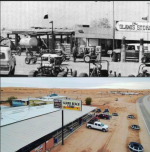
The original Glamis Beach Store

The original store dates back to the growth of off-road recreation in the 1960s and 1970s. As dune riding exploded in popularity, there were almost no services available in the Imperial Sand Dunes. Riders needed fuel, groceries, ice, parts, and a place to gather before heading into the sand.

The Beach Store became exactly that.

It evolved into a one-stop hub where visitors could:

* Buy groceries and supplies.
* Purchase fuel.
* Pick up permits and local information.
* Meet friends before entering the dunes.
* Hear the latest trail conditions and off-road news.

Despite its name, there is obviously no beach. The “Beach Store” name came from the old saying that the dunes were “California’s beach in the desert”—a place where people spent entire weekends camping with family and friends.

During the 1970s and 1980s, nearly every Glamis trip started with a stop at the store. It became one of the most photographed buildings in the dunes.

The fire that destroyed the old store

In the late 1980s, the original wooden Beach Store burned to the ground. Many longtime Glamis visitors remember waking up to hear the news, and rumors circulated for years about what caused the fire. While stories of arson have persisted within the off-road community, no publicly documented investigation ever confirmed those rumors.

The loss was a major blow because the original building had become part of Glamis culture.

The new Glamis Beach Store

Not long after the fire, a new, larger, more modern store was built just off Highway 78 near the original location.

The new store kept the spirit of the original while adding:

* Larger grocery selection
* Hot food
* Ice
* Off-road supplies
* Souvenirs
* Permit sales
* Restrooms

Today it continues to be the first stop for thousands of visitors entering the dunes every weekend during riding season.

Owned by the LeBlanc family

For decades, the Beach Store and much of the surrounding private property were owned by the family of Eugene LeBlanc.

LeBlanc became one of the most influential private landowners in Glamis. His property included:

* The Beach Store
* Vendor Row
* Event areas
* Parking areas
* Large portions of the private land surrounding Highway 78

Because nearly all of Glamis is federal land managed by the Bureau of Land Management, the Beach Store property became incredibly valuable as one of the few privately owned commercial areas in the dunes.

Polaris purchases the property

In 2018, Polaris Inc. purchased the Beach Store, Vendor Row, and approximately 166 acres of surrounding property from the LeBlanc estate for a reported $6.8 million.

The purchase surprised much of the off-road industry.

The goals included:

* Preserving the historic gathering place.
* Expanding support for events such as Camp RZR.
* Improving Vendor Row with permanent infrastructure.
* Exploring an R&D and testing facility for off-road vehicles.
* Adding future commercial and RV amenities while maintaining access for the off-road community.

Today

Today, the Beach Store remains the social center of Glamis.

Every major holiday weekend sees thousands of people stop there to:

* Meet riding groups.
* Shop with vendors.
* Attend major events like Camp RZR.
* Take the traditional photo in front of the store before heading into the dunes.

For many families, visiting the Beach Store is a tradition passed down through multiple generations.

One interesting fact is that despite Glamis attracting hundreds of thousands of visitors every season, the Beach Store area is one of the very few privately owned commercial properties surrounded by the vast public lands of the Imperial Sand Dunes Recreation Area. That unique position is a big reason it has remained the heart of the Glamis experience for over 50 years.
1784145908706.png
 
Back
Top