Love em or hate em.. BLM is here to stay and we should co exist!
The history of the Bureau of Land Management (BLM) and the Imperial Sand Dunes (better known by most enthusiasts as Glamis) is a story of balancing two competing missions: protecting public land while keeping it open for recreation. Depending on who you ask, the BLM has either preserved Glamis for future generations—or made access increasingly difficult.
Here’s the full picture.
How the BLM became involved
The dunes are federally owned public land managed by the Bureau of Land Management.
The BLM itself was created in 1946 when two federal agencies—the General Land Office and the Grazing Service—merged. Its job became managing millions of acres of public land across the western United States for multiple uses, including recreation, grazing, mining, wildlife conservation, and energy development.
The Algodones Dunes had already been used for decades by:
* Native peoples
* Railroad construction crews
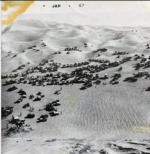
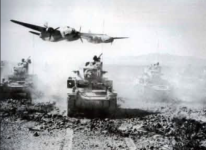
* Military training during World War II
* Early off-road enthusiasts beginning in the 1930s and exploding after WWII as surplus Jeeps became available.
⸻
The birth of the recreation area
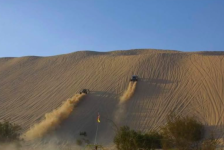
As off-roading became more popular during the 1960s and 1970s, the federal government recognized the dunes as one of America’s premier OHV destinations.
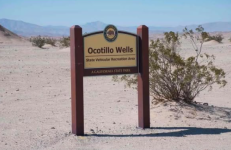
The BLM officially established and began managing what is now known as the Imperial Sand Dunes Recreation Area.
Today it includes:
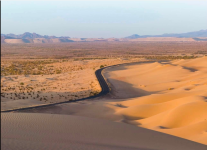
* roughly 118,000 acres
* over 40 miles of dunes
* the largest open OHV dune system in the United States.
⸻
Ways the BLM has helped the dunes
Many people focus on restrictions, but the BLM has also invested heavily in making Glamis what it is today.
1. Kept it public
Without federal ownership, much of the dunes could have eventually become private land.
Instead, virtually anyone can ride there after purchasing a permit.
⸻
2. Built recreation infrastructure
Over the years the BLM developed:
* campgrounds
* vault toilets
* dumpsters
* emergency access roads
* information kiosks
* ranger stations
* permit system
* rescue coordination
These improvements make weekends with 100,000–200,000 visitors possible during peak holidays.
⸻
3. Search and Rescue
BLM Rangers perform:
* medical rescues
* lost child searches
* helicopter operations
* wildfire response
* law enforcement
Thousands of incidents have been handled over the decades.
⸻
4. Preserving wildlife
The dunes aren’t just sand.
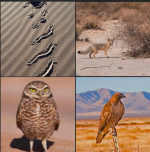
Scientists have documented over 1,100 insect species, many found nowhere else, along with rare plants and animals specially adapted to dune life.
BLM management has helped preserve these unique habitats.
⸻
Where controversy began
Beginning in the 1970s and accelerating during the 1990s, environmental studies revealed that portions of the dunes contained rare species, including the endangered Peirson’s milk-vetch and other sensitive plants and insects.
Environmental organizations sued the federal government, arguing that unrestricted vehicle use threatened these species.
Federal courts agreed that additional environmental review was necessary.
⸻
The biggest criticism of the BLM
Many off-road enthusiasts believe the agency became too restrictive.
Examples include:
Large area closures
Thousands of acres were closed to motorized use.
The most notable areas include:
* North Algodones Dunes Wilderness
* various ecological closures
* seasonal closures
Some long-time riders estimate roughly one-third of historically rideable dunes became unavailable over time.
⸻
Permit fees
The permit system was introduced to help fund management.
Many riders support it because it funds operations, while others feel the fees continue to increase without enough visible improvements.
⸻
Increased regulations
Over time the BLM added rules covering:
* speed limits in camping areas
* alcohol enforcement
* sound regulations
* camping restrictions
* fire rules
* whip flags
* vehicle registration requirements
Supporters see these as necessary for safety; critics view them as excessive.
⸻
Major legal battles
Perhaps the most famous period occurred between 2000 and 2014.
Environmental groups sued over protection of rare plants.
Large riding areas were temporarily closed while studies were completed.
After years of research, lawsuits, and planning:
* some areas remained closed
* some reopened
* management plans were rewritten
Organizations like the American Sand Association and California Association of Four Wheel Drive Clubs worked alongside the BLM and in court to preserve as much riding access as possible.
⸻
The other side of the story
Many conservation biologists argue the BLM actually didn’t close enough.
Their reasoning includes:
* Glamis remains one of the largest open OHV dune systems in America.
* Approximately 80% or more of the recreation area is still open to motorized recreation.
* Protected areas safeguard habitats found nowhere else.
⸻
How most Glamis experienced duners view the BLM
If you spend enough time around campfires in Glamis, you’ll hear a wide range of opinions:
Positive views
* Keeps Glamis open.
* Provides rangers and emergency response.
* Maintains facilities.
* Protects the dunes from development.
Negative views
* Too much bureaucracy.
* Reduced riding area over the decades.
* Higher fees.
* Regulations that can feel disconnected from the off-road community.
The reality is that the BLM operates under a legal “multiple-use” mandate. It isn’t tasked solely with maximizing recreation or solely with conservation; it must balance recreation, wildlife protection, cultural resources, public safety, and other uses. That balancing act is the source of much of the long-running tension surrounding Glamis.